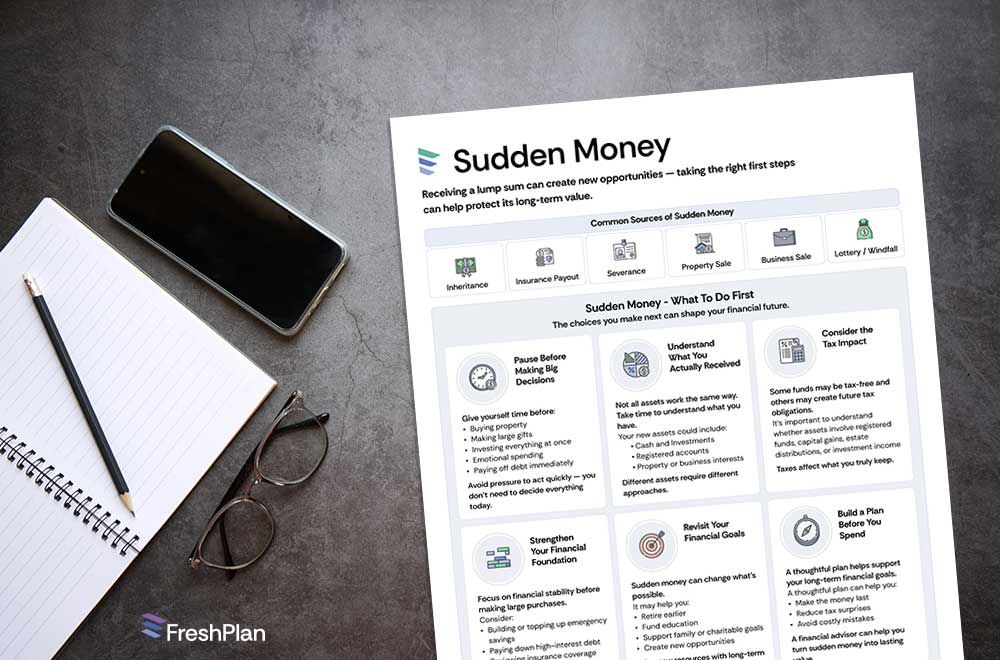
Sudden Money: What To Do First — A Financial Planning Infographic for Advisors
Receiving sudden money — whether from an inheritance, severance package, insurance payout, or property sale — can create new opportunities, but it can also lead to rushed decisions. Financial advisors are often asked to help clients make sense of these moments and avoid costly mistakes.
Sudden Money Requires Careful Planning.
The Sudden Money: What To Do First infographic helps advisors guide thoughtful conversations with clients who have received — or are expecting — a lump sum. It provides a clear, structured way to slow decision-making, evaluate financial priorities, and turn unexpected money into long-term financial value.
Why Clients Need Guidance After Receiving Sudden Money
Sudden money can arrive in many forms, including:
- Inheritance from an estate
- Insurance payouts
- Severance packages
- Business or property sales
- Lottery winnings or unexpected financial windfalls
While these events can feel positive, they often create pressure to act quickly. Clients may feel overwhelmed, uncertain, or tempted to make large decisions before fully understanding the long-term impact.
This is where a financial advisor plays an essential role — helping clients pause, evaluate their options, and create a plan that protects their future.
What this Infographic Covers
Key Financial Planning Steps After Receiving a Lump Sum
The Sudden Money infographic guides clients through six practical steps designed to support sound financial decisions:
1. Pause Before Making Big Decisions
Encourages clients to slow down and avoid rushing into large purchases, investments, or gifts.
2. Understand What Was Received
Helps clients recognize the different types of assets they may receive, including cash, investments, registered accounts, or property.
3. Consider the Tax Impact
Introduces the importance of understanding taxes related to registered funds, capital gains, and income.
4. Strengthen Financial Foundations
Encourages building emergency savings, reducing high-interest debt, and reviewing insurance coverage.
5. Revisit Financial Goals
Helps clients align new resources with long-term priorities such as retirement, education, or family support.
6. Build a Plan Before Spending
Reinforces the importance of structured planning to protect long-term financial outcomes.
The infographic serves as a conversation guide, helping advisors explain next steps clearly while reinforcing the value of professional financial planning.