When Should You Take CPP Infographic
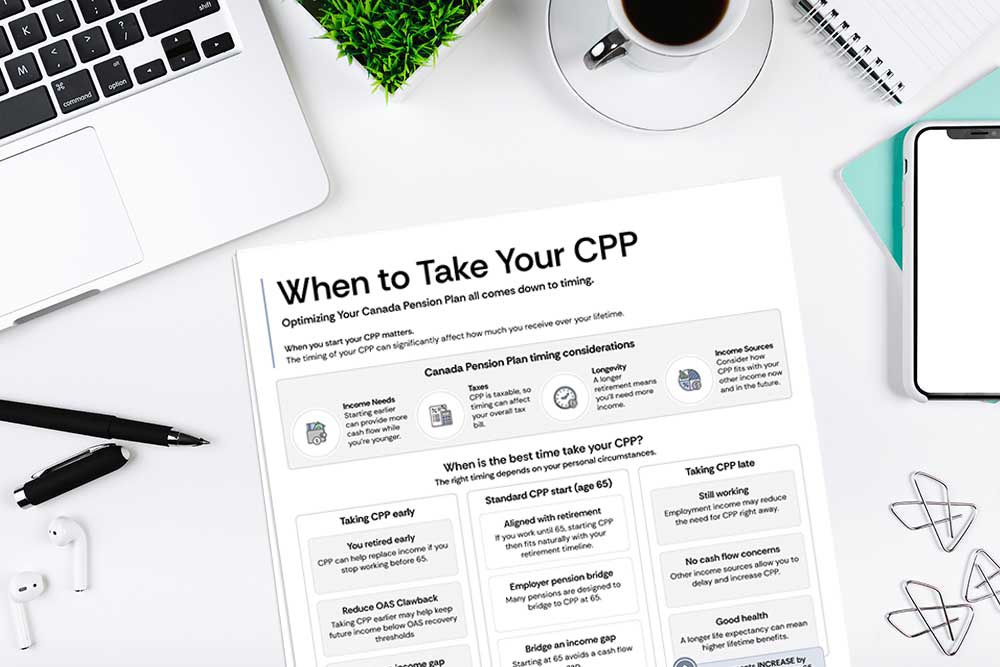
As your clients approach retirement, one of the key decisions they’ll face is when to start collecting Canada Pension Plan (CPP) benefits. While Canadians can begin receiving CPP anytime between ages 60 and 70, the timing of this decision can have a meaningful impact on lifetime retirement income.
How do you make sure you’re getting the most out of CPP? It all comes down to timing.
This infographic highlights the core considerations that can help clients answer the question: When should you take CPP? Waiting longer to start CPP results in higher monthly payments, while taking CPP earlier provides income sooner—but at a reduced amount. There is no universal “right” age; the optimal choice depends on each client’s circumstances, priorities, and long-term plans.
Key Factors to Consider
Before deciding, clients should carefully evaluate several important factors:
Retirement Income Needs and Sources
Consider how CPP fits alongside other income sources such as workplace pensions, RRSPs, TFSAs, and investment income. Clients with sufficient income early in retirement may benefit from delaying CPP, while others may need the cash flow sooner.
Length of Retirement
A longer retirement means retirement income must last longer. Clients who expect a longer retirement may benefit from higher CPP payments later in life by delaying benefits.
Taxation
CPP benefits are taxable income. The timing of CPP can affect marginal tax rates, especially when combined with other retirement income sources.
This infographic is designed to help clients understand the trade-offs of taking CPP early versus delaying benefits—so they can make informed decisions aligned with their retirement goals.